
Why You Don't Feel Like Yourself Anymore: The Brain, Trauma, Perimenopause, and Your Sense of Self
Feeling like you don’t recognize yourself can happen during periods of chronic stress, trauma, major life changes, and perimenopause. Your sense of self is shaped by your brain, body, relationships, and experiences, and it can change. Therapy can help you understand what is changing, reconnect with yourself, and figure out what actually feels like you now.
By Michaela Kozlik, LCPC · Therapist specializing in perimenopause anxiety, burnout & trauma, Illinois
Have you ever had a moment when you realized you do not really feel like yourself anymore? Maybe nothing dramatic happened.
You just notice that the person you used to know so well feels harder to find.
You second-guess yourself more. Things that never bothered you suddenly do. You react differently in relationships. You are less willing to tolerate certain things, but you are not entirely sure what you want instead.
Or maybe you look at your life and think:
When did I become this version of myself?
I hear some version of this from women in therapy all the time. And there is something important to understand about it:
Your sense of self is not one fixed thing stored somewhere in your brain.
It emerges from many systems working together, including memory, emotion, body awareness, relationships, attention, and the stories you have developed about yourself over a lifetime.
Those systems are also influenced by what you have lived through, the relationships you have been in, chronic stress, trauma, and yes, hormonal changes.
So when you say, I don't feel like myself, that experience can be very real.
Let's look at some of what may be happening underneath it.
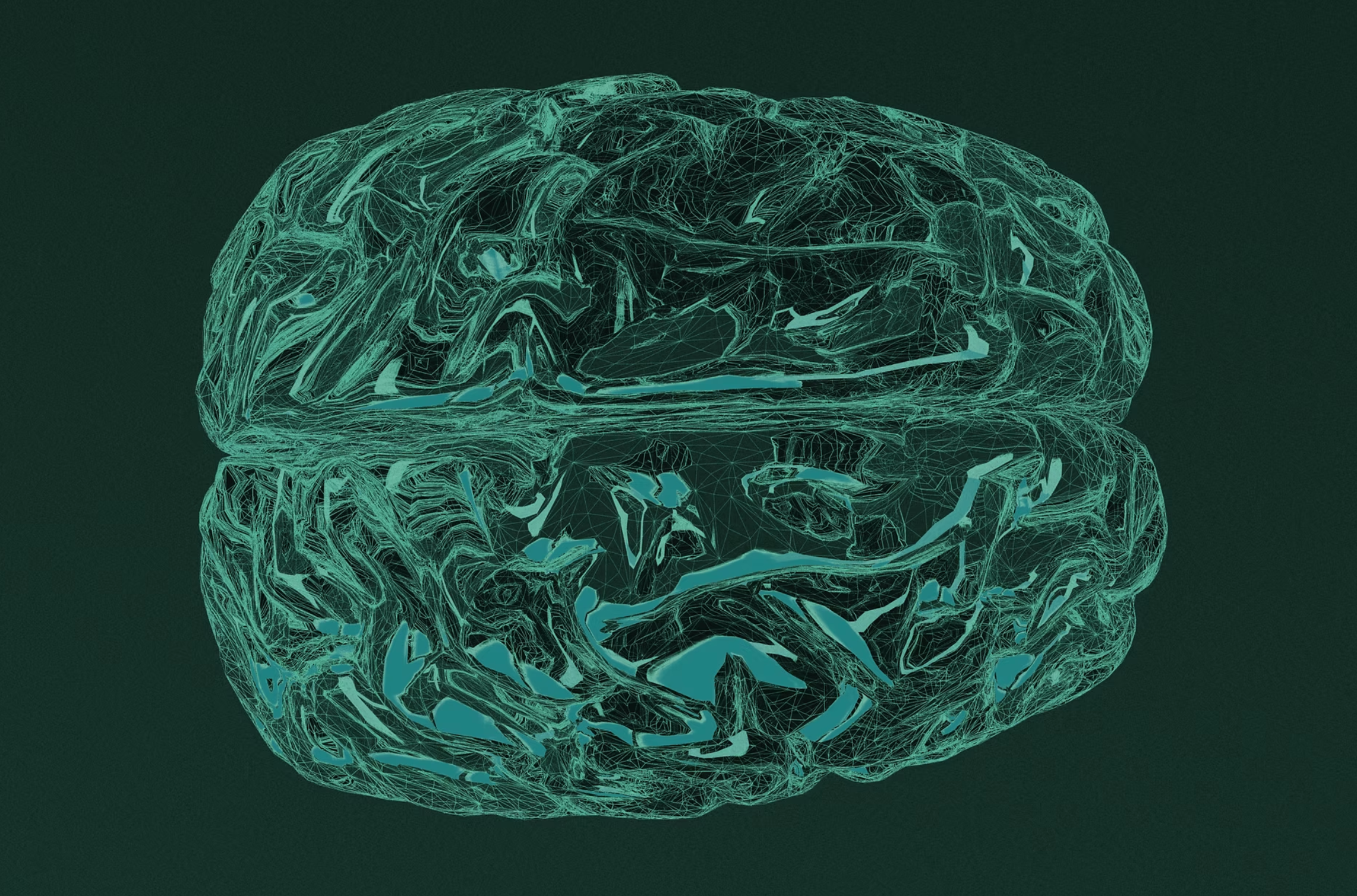
Your Prefrontal Cortex: The Stories You Tell About Yourself
The prefrontal cortex is involved in things like planning, decision-making, reflection, and regulating our responses.
It also plays a role in how we make sense of ourselves and our experiences.
And all of us develop stories about who we are.
I'm the responsible one.
I'm difficult.
I have to keep everyone happy.
I'm too sensitive.
I should be able to handle this.
Some of these stories started a very long time ago.
The problem is that a story can continue running long after the circumstances that created it have changed.
You can be 48 years old and still responding to yourself according to something you learned when you were 12.
Therapy gives us somewhere to get curious about those stories.
Not necessarily to replace every “negative thought” with a positive one.
Sometimes it is simply asking:
Is this actually true about me?
Or is this something I learned to believe?
The stories we tell about ourselves can feel like facts.
They are not always facts.
And they can change.
The Insula: When Your Body Knows Before You Do
The insula is involved in interoception, which is your ability to notice what is happening inside your body.
Your heartbeat, breathing, tension, hunger, or heat.
That sinking feeling in your stomach when someone says something that does not sit right.
This matters because knowing yourself is not purely intellectual. Often your body knows something before you have words for it.
You say yes, but your stomach tightens. You tell yourself everything is fine, but you cannot sleep.
You insist that something does not bother you while your shoulders are practically touching your ears.
For women who have spent years overriding their own needs or living with chronic stress or trauma, those internal signals can become difficult to hear or trust.
You may become very good at knowing what everyone else needs while having no idea what you need.
What does somatic therapy have to do with this?
This is one place somatic therapy can be helpful.
Instead of only talking about what happened, we also notice what happens inside you while you are talking about it.
Maybe your chest tightens, or you suddenly stop breathing deeply. Maybe part of you wants to leave the room.
Maybe you feel nothing at all.
We don’t need to force any of it. We just start noticing.
Reconnecting with yourself can begin that simply.
The Default Mode Network: The Voice That Never Seems to Stop
The default mode network is a group of interconnected brain regions that becomes especially active during things like self-reflection, remembering the past, imagining the future, and thinking about ourselves and other people.
In other words, it is involved in a lot of the mental activity that happens when your brain has nowhere specific to be.
Which can be nice and exhausting at the same time
Why did I say that?
What if I had done something differently?
What does she think of me?
What if this happens?
Why am I like this?
This reflection can turn into rumination. The same thoughts go around and around, but nothing actually gets resolved.
Therapy is not about making your brain stop thinking, but it can help you notice when a thought has become a loop rather than useful information. That little bit of space matters. A thought can be present without automatically becoming the truth.
The Amygdala: When Your Brain Keeps Looking for Trouble
The amygdala is involved in detecting emotionally important information, particularly potential threat.
Think of it as part of your brain's alarm system.
If you have lived through trauma, chronic stress, unpredictable relationships, or environments where you had to pay close attention to other people's moods, your system may become very good at watching for what could go wrong.
You may know intellectually that you are okay and still feel your whole body preparing for something bad to happen. That is one of the frustrating things about anxiety and trauma.
Knowing you are safe and feeling safe are not always the same experience.
What therapy can do with an overactive alarm system
You can’t talk alarm system into calming down. Telling yourself everything is fine may help sometimes, but often the body needs experience too. This is where grounding, slowing down, noticing what is happening in the present, and experiencing safe connection can matter.
Over time, your system gets more information.
This is uncomfortable, but I'm okay.
Someone is disappointed with me, and I can handle it.
Conflict does not automatically mean abandonment.
I can say no and still be safe.
That is very different from simply telling yourself not to be anxious.
The Posterior Cingulate Cortex: Who You Are Around Other People
The posterior cingulate cortex is part of a larger network involved in self-referential thinking, memory, and social processing. But I think the more interesting question is what happens to our sense of self in relationships.
Some women know exactly what I mean by this.
You are one version of yourself around your mother, around your partner, another at work or with your friend. Maybe you learned to read the room before you learned to read yourself.
You became good at being easy, helpful, successful, low maintenance. Whatever kept you connected.
And after enough years of adjusting yourself around other people, you start wondering:
What do I actually want?
What do I think?
Who am I when nobody needs anything from me?
Therapy can become a place to start noticing the difference between who you are and who you learned you needed to be.
So Where Does Your Sense of Self Actually Live in the Brain?
There is no single “self center” in the brain. Your sense of who you are emerges from multiple systems working together: memory, emotion, body awareness, attention, relationships, and the meaning you make from your experiences.
That is actually good news because these systems are not completely fixed.
Your brain continues to change in response to experience, and that ability is called neuroplasticity.
But despite how the word sometimes gets used online, neuroplasticity doesn’t mean you can think positively enough to become a different person. It means experience matters, repeated experience matters.
What Neuroplasticity Actually Looks Like in Therapy
Neuroplasticity can sound very scientific. In real life, it can look surprisingly ordinary.
You notice your inner critic and do not immediately believe it.
You set a boundary and discover you can survive someone's disappointment.
You recognize that your anxiety has been activated before automatically assuming something terrible is happening.
You feel anger and realize it doesn’t make you a bad person. You let someone care about you without immediately pulling away.
You say what you actually think.
None of these moments suddenly “rewires your brain,” but the experiences accumulate. Old patterns can become less automatic and new responses become more available. You are developing more ways to be yourself.
Why Perimenopause Can Make You Feel Like a Different Person
And then there is perimenopause.
This is where the experience of I don't feel like myself can become especially intense for women.
Hormonal fluctuations during perimenopause interact with brain systems involved in mood, sleep, attention, memory, stress, and emotional regulation. That can show up as intense anxiety, irritability, changes in concentration, disrupted sleep, mood changes, or simply feeling much more emotionally reactive than you used to.
But hormones are rarely happening in a vacuum. Perimenopause often comes during already complicated stage of life.
Children are growing up, parents are aging. Relationships are changing, your body is changing. Work may not mean what it once did. You have less tolerance for relationships or situations you managed for years. And sometimes experiences or memories from much earlier phase in your life start showing up again.
You're Not Supposed to Become the Old You Again
When clients tell me they want to “feel like myself again,” I understand what they mean.
You want your energy back, the confidence, patience, and the ability to handle things you used to.
But I also wonder whether getting back to the old version of yourself is always the goal.
Maybe some of what is happening deserves your attention.
Maybe the woman who could handle everything was exhausted and being endlessly accommodating cost you something.
Maybe some relationships only worked because you kept making yourself smaller inside them, or your body is asking for something different now.
Feeling unfamiliar to yourself can be strange, but unfamiliar does not automatically mean wrong. There is a difference between losing yourself and outgrowing a version of yourself.
Online Therapy for Women in Illinois Who Don't Feel Like Themselves
If you have been thinking, I don't know who I am anymore, you do not need to have a neat explanation for it before coming to therapy.
Trauma, anxiety, chronic stress, burnout, relationships, life transitions, and perimenopause can all affect how connected you feel to yourself.
I offer online therapy and therapy intensives for women throughout Illinois, with a particular focus on trauma, anxiety, burnout, perimenopause, and midlife changes.
My approach includes somatic therapy, parts work, attachment-based therapy, and connection-focused therapy.
We don’t start by looking for what’s wrong with you. We start with what is happening now with you and in your life. And often, underneath all the confusion, you begin to recognize yourself again.
Schedule a free consultation here
KEEP READING
Michaela Kozlik, LCPC — Licensed Clinical Professional Counselor in Illinois, specializing in trauma, anxiety, burnout, somatic therapy, and nervous system regulation for women in perimenopause and midlife transitions. Offering individual therapy and therapy intensives virtually throughout Illinois.
Schedule a call with me
📞 773-343-5005🌐 inpsychotherapy.com📧 Michaela@inpsychotherapy.com
Serving women virtually across Illinois — Chicago, Evanston, Oak Park, Naperville, Wilmette, Hinsdale, Downers Grove, Schaumburg, Glenview, Libertyville, Rockford, Peoria, Springfield, Champaign, Aurora, Joliet, Elgin, Waukegan, Wheaton, Barrington, Lake Forest, Highland Park, Winnetka, Glencoe, Northbrook, Palatine, Arlington Heights, Skokie, Elmhurst, Lombard, Lisle, Bol