


Where is the Self in Your Brain?
- Michaela Kozlik
- Nov 5, 2024
- 6 min read

Updated: May 24
Why you sometimes feel completely grounded in who you are, and other times feel like a stranger to yourself.
By Michaela Kozlik, LCPC · Therapist specializing in perimenopause anxiety, burnout & trauma, Illinois
Have you ever had the experience of not recognizing yourself?
That the self you used to know, or thought you knew, has become harder to locate.
This is one of the most common experiences women bring into therapy. And it makes complete neurological sense.
Because your sense of self is not a single, fixed thing living in one part of your brain. It's more like a network, a web of interconnected regions that are constantly communicating, constantly shaping each other, constantly being influenced by your experiences, your relationships, your history, and your hormones.
Understanding this doesn't just make the confusion make sense. It also means something deeply hopeful: your sense of self can change. Because the brain can change.
Here is a plain-language map of where the self actually lives in the brain — and what therapy does with each part.
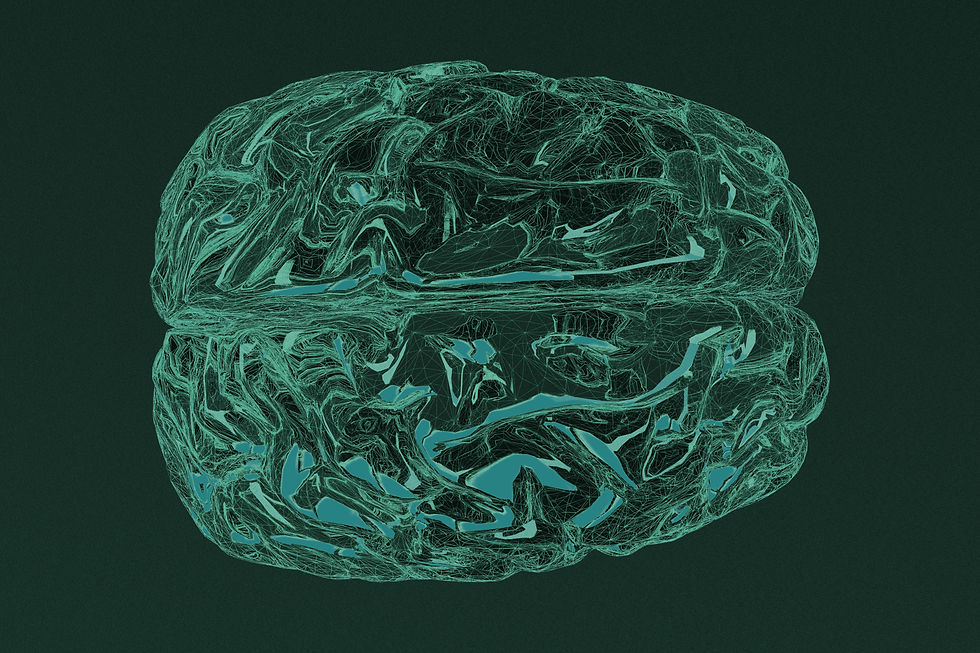
The Prefrontal Cortex — The Storyteller
What it does: Planning, decision-making, self-reflection, making sense of your life narrative. This is the part of the brain that helps you construct the story of who you are. It connects past experiences to future intentions. It helps you identify your values and make choices that align with them.
What happens when it gets stuck: Rigid, self-critical narratives build up over time. The story becomes inflexible. You get locked into a version of yourself that doesn't leave room for growth or change.
What therapy does: Creates space to examine and reframe those narratives. To question which parts of the story are actually true — and which ones were written in a different context, by a younger version of you, under conditions that no longer apply.
The stories we tell about ourselves are not facts. They are interpretations, and interpretations can be updated.
The Insula — The Sensing Center
What it does: Interoception — the awareness of sensations inside your body. Heartbeat, breath, gut feelings, emotional experience as something physically felt rather than just thought. Your sense of self is embodied. The insula is the bridge between mind and body.
What happens when it gets stuck: Disconnection from the body. Emotional numbing. The sense of watching your life from behind glass — present but not really present. As I write in This Doesn't Look Like Depression. But It Might Be — this disconnection is one of the most common and least recognized experiences of women carrying unresolved stress or trauma.
What therapy does: Brings gentle attention back to body-level experience. Helps you learn to notice and trust your body's signals rather than overriding them. Rebuilds the connection between what you think and what you feel.
The Default Mode Network — The Inner Narrator
What it does: Activates when you're not focused on a task during daydreaming, self-reflection, remembering the past, imagining the future. Weaves together memories and personal reflections into the autobiographical story of you.
What happens when it gets stuck: Rumination, self-critical loops, getting trapped in past mistakes or future fears. The inner narrator starts telling the same painful story on repeat.
What therapy does: Helps regulate the DMN interrupting unhelpful loops, creating space between the thought and the belief, building new narrative pathways that are more flexible, more compassionate, more current.
As I write in You Can See the Pattern. So Why Can't You Stop It? — the narratives we run on autopilot were formed through experience. And they can be changed through experience too.
The Amygdala — The Alarm System
What it does: Processes emotional responses, particularly fear and threat. Activates fight, flight, freeze, or fawn when danger is perceived real or imagined.
What happens when it gets stuck: Chronic hyperactivation. The alarm goes off constantly in relationships, in conflict, in situations that feel threatening even when they're not. For women with trauma histories, the amygdala can become overactive — making the nervous system feel perpetually braced for something bad.
As I explain in What Chronic Stress Is Actually Doing to Your Body — this chronic activation has real physical consequences. And as I write in When the Past Comes Back: Trauma Resurfacing During Perimenopause — perimenopause makes the amygdala significantly more reactive, which is why old wounds surface with such intensity during this season.
What therapy does: Helps calm the alarm system through grounding, nervous system regulation, and the slow accumulation of experiences of genuine safety. As I write in What It Actually Feels Like to Feel Safe — the nervous system learns safety through experience, not through being told everything is fine.
The Posterior Cingulate Cortex — The Social Self
What it does: Helps you compare current experiences with past ones. Involved in how you understand your relationships and social identity, how you feel connected to or separate from others.
What happens when it gets stuck: Feeling not yourself around certain people. Struggling with belonging. Measuring your worth through other people's perceptions. Losing track of who you are when you're in relationship with someone who requires a particular version of you.
What therapy does: Explores how social experiences have shaped your self-view. Helps you recognize and validate your authentic self independent of external judgment, approval, or the roles that others have cast you in.
When your sense of self has been shaped primarily by managing other people's reactions, finding out who you actually are underneath that is some of the most important work there is.
What This Means for Therapy
These brain regions don't work in isolation. They are in constant communication. And therapy works at exactly that intersection.
When you begin to change the story you tell about yourself, the prefrontal cortex shifts. That shift affects how you feel about yourself in your body, the insula responds. As the nervous system calms, the amygdala settles. As you feel safer in yourself, the relationships around you start to change too.
This is not so simple or linear. It is not fast. But it is real.
The brain can change. Which means your sense of self can change.
This is what neuroplasticity actually means in practice. Not that you can think yourself into a different person, but that with the right experiences new pathways form. And more honest and more grounded version of yourself becomes accessible.
The confusion of not recognizing yourself is not the end of the story. It is often the beginning of finding a truer one.
Especially for Women in Perimenopause
Perimenopause affects every one of these brain regions simultaneously.
Estrogen decline affects the prefrontal cortex making self-reflection harder and self-criticism louder. It affects the amygdala making the threat response more reactive. It affects the insula making body-based experience more intense and harder to regulate. It affects the default mode network making rumination and identity questioning more persistent.
As I explain in You're Not Losing Your Mind. You're in Perimenopause — this is not a personal failing. This is neuroscience and it deserves neurologically-informed support.
You can read more about what that looks like on my perimenopause therapy page.
The Self Is Not Stuck
Here is what I most want you to take from this.
The sense of self that feels lost, confused, unfamiliar, or smaller than it used to be, is not permanent. It is not who you are. It's a pattern in a brain that is capable of forming new patterns. With the right support, enough safety, and with the kind of sustained, attuned therapeutic relationship that gives your nervous system new information.
Ready to Talk?
I offer virtual therapy and therapy intensives across all of Illinois for women navigating identity confusion, trauma, perimenopause, and nervous system dysregulation.
Schedule a free consultation here — no pressure, no commitment, just a real conversation.
Michaela Kozlik, LCPC — Licensed Clinical Professional Counselor in Illinois, specializing in trauma, anxiety, burnout, somatic therapy, and nervous system regulation for women in perimenopause and midlife transitions. Offering individual therapy and therapy intensives virtually throughout Illinois.


Comments