
Trauma & Complex PTSD Therapy in Illinois
Somatic, IFS, and attachment therapy for women
Treating complex PTSD, childhood trauma, and relationship wounds via telehealth statewide, including Chicago.
Complex trauma is more than what happened to you. It’s also what you needed and didn’t get.
The safety you needed. The protection you deserved.
The person who should have helped you understand what was happening. The adult who should have believed you.
Maybe you tried to tell someone and they minimized it, changed the subject, or somehow made it about themselves.
So there was nowhere for your fear, anger, sadness, or confusion to go. You learned to deal with it on your own.
For many people with complex trauma, that aloneness becomes part of the injury.
And that’s part of why the relationship we build in therapy matters. Being seen, believed, and understood can become a new experience you and your nervous system learn to trust.

What if trauma didn't have to keep running your life?
That's the idea behind somatic, parts-based (IFS) trauma therapy, though it's not really a body-fixing technique, and it's not a shortcut to feeling calm. It's a way of understanding the different parts of you that shaped around what happened: the one who learned to caretake, the one who learned to disappear, the one who decided long ago that needing anything was dangerous. Your body is part of that story, but so is who you trust, what you believe you're allowed to want, and how you see yourself.
We begin by understanding what you lived through and what you had to do to get through it. The ways you learned to protect yourself made sense then, even when those same patterns are making life harder now.
Therapy is about more than getting your symptoms under control. It’s about feeling safer in your own body, less overwhelmed by your emotions, more connected in your relationships, and more able to live the life you want now.
A trauma therapy specialist can help you identify the goals you want to work toward, whether that means navigating difficult transitions, understanding recurring relationship patterns, or developing a more compassionate view of yourself.
Complex trauma can feel like
YOU MINIMIZE YOUR EXPERIENCES
You tell yourself it wasn't that bad. Your body disagrees. You learned early that your experiences and feelings didn't count.
YOU ARE SUCCESSFUL BUT TIRED
You got through it and built a good life anyway. You just never dealt with it. Now it's catching up with you.
RELATIONSHIPS FEEL HARDER THAN THEY SHOULD
You are afraid of conflict. You struggle to trust. You worry people will leave, reject, or misunderstand you.
YOU TAKE CARE OF EVERYONE ELSE
You learned to manage everyone else's feelings to stay safe. Now you can't tell your feelings apart from theirs.
PERIMENOPAUSE CAN CHANGE HOW OLD TRAUMA SHOWS UP
Old anxiety, grief, or trauma suddenly feels close again. You didn't see this coming, and it's hard.
Food, work, scrolling, or productivity. You stay busy to avoid slowing down. Anything that helps you avoid what has never felt safe enough to feel.
YOU NUMB THE PAIN
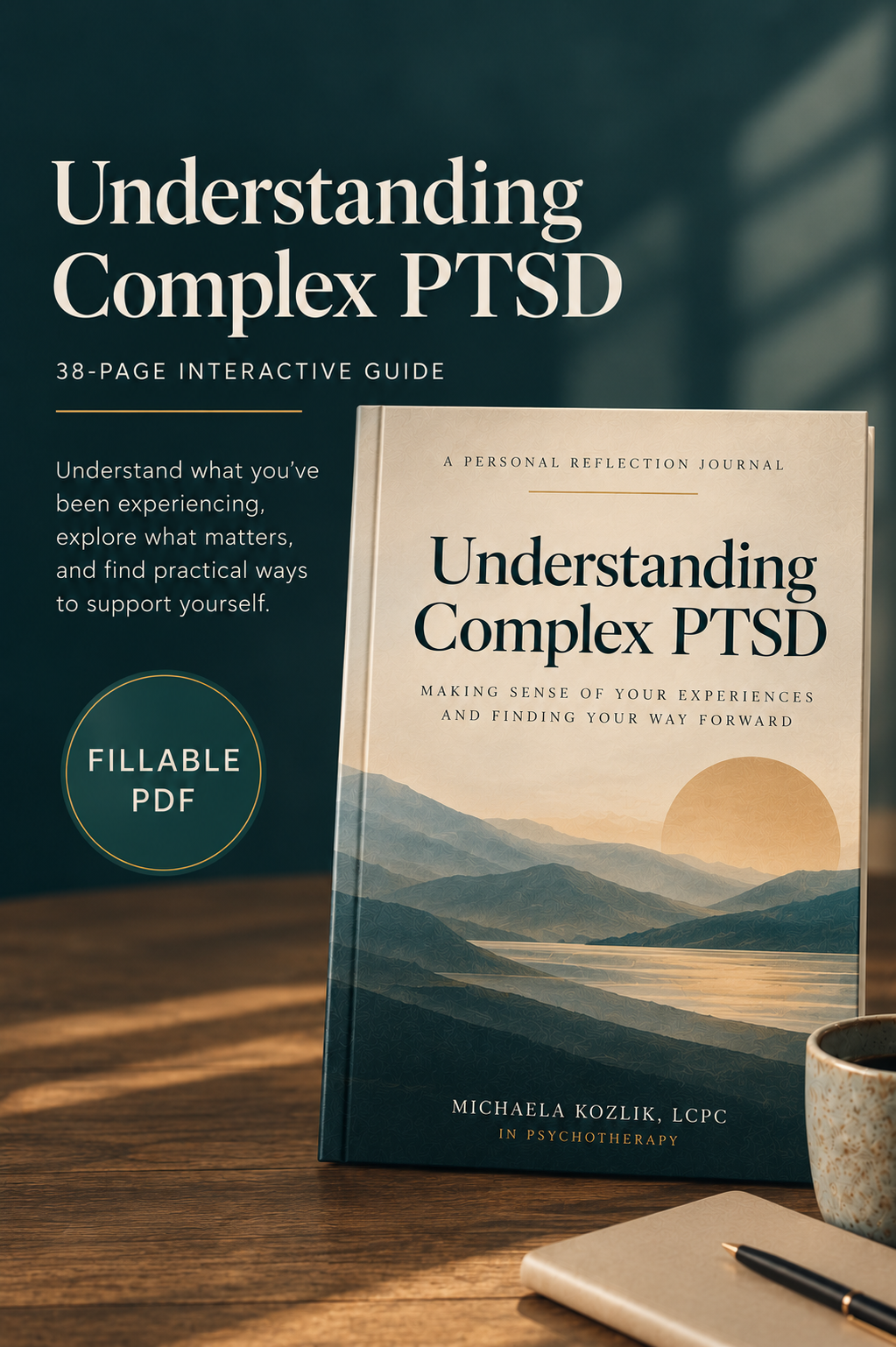
Understanding Complex PTSD: Free Personal Journal
Sometimes reading about trauma brings up more questions than answers.
I created Understanding Complex PTSD as a personal journal if you want to explore your experiences with more time and space.
Inside, you'll find thoughtful explanations of complex trauma, how it can affect everyday life, relationships, emotions, and your sense of self, along with reflections and practical ways to support yourself.
You can write directly into the journal, take your time, skip what doesn't feel useful, and return whenever you want.
EXPLORE THE FREE INTERACTIVE GUIDE (no email required)
Why work with me
I've spent years sitting with people through the pain and trauma that doesn't resolve in a few sessions. It's shaped everything I understand about what trauma does to a person, and what actually helps. My training gave me the framework, but it's the years of actually being present with my clients that taught me what real healing takes. It's part of why I do this work the way I do.
I'm a Licensed Clinical Professional Counselor (LCPC) and my training runs through IFS-informed work, sensorimotor psychotherapy, Hakomi, depth psychotherapy, somatic trauma treatment, and attachment-focused care.
My approach to trauma counseling considers the relationship between your past experiences and your present-day emotional responses, beliefs, and relationships. We can explore the patterns that no longer serve you while respecting your boundaries and working at a pace that feels manageable.
What changes in trauma therapy
The past feels like the past instead of something you’re reliving every day.
You feel safer in your relationships and less reactive.
You recover more quickly after conflict.
You stop apologizing for existing.
You don’t need to work so hard to avoid your feelings.
You notice your feelings before they become overwhelming.
You trust your own judgment and need less reassurance.
You can rest without feeling guilty.
Your body carries less tension.
Different relationship with your own history. Not really forgetting, but no longer being defined by it.
Is trauma therapy right for you?
This may be a good fit if you
Live with anxiety, complex PTSD, childhood trauma, or attachment wounds.
Feel stuck despite years of insight.
Want therapy that includes both your thoughts and your body’s responses.
Are ready for deeper work rather than short-term symptom management.
Want to create more compassionate relationship with yourself and the pain that you’re still experiencing
Frequently Asked Questions
-
Complex trauma develops after repeated experiences of emotional pain, neglect, criticism, rejection, abuse, or inconsistent caregiving, especially during childhood. Instead of one overwhelming event, it is often the accumulation of many experiences that taught you the world was unpredictable or that your needs were too much.
Complex trauma can affect how you relate to yourself, your emotions, your body, and other people long after the original experiences have ended.
-
Not everyone with complex trauma has flashbacks or remembers one defining event.
Many women come to therapy because they struggle with anxiety, perfectionism, people-pleasing, emotional overwhelm, chronic self-criticism, difficulty trusting others, or feeling disconnected from themselves.
If you’ve always felt like you have to hold everything together, avoid conflict, or earn love by taking care of everyone else, those patterns may be worth exploring.
-
No. Understanding your past can be important, but insight alone does not always create change.
Trauma therapy also pays attention to what happens in the present—how your body responds to stress, how you experience relationships, the protective patterns you’ve developed, and the beliefs you’ve carried for years.
The goal is not simply to understand your story but to experience yourself differently.
-
No. You are never expected to tell your whole story.
In fact, many people begin trauma therapy without sharing every detail of their past. We work at a pace that feels manageable and focus on building safety, understanding your protective patterns, and helping you feel more connected to yourself.
-
PTSD is often associated with one or more traumatic events and may include symptoms such as flashbacks, nightmares, or heightened fear responses.
Complex PTSD develops after ongoing or repeated trauma, particularly during childhood or within important relationships. In addition to symptoms of PTSD, it often affects identity, self-worth, emotional regulation, trust, and relationships.
Many women with complex trauma describe feeling fundamentally “different” without understanding why.
-
Therapy intensives are extended therapy sessions that allow us to spend several uninterrupted hours working together instead of meeting for one hour each week.
Many people find the extended sessions helpful because they create enough time to move beyond simply talking about problems and into the deeper patterns that keep them stuck.
Intensives can be a good fit for trauma, anxiety, attachment wounds, major life transitions, and women who travel, have demanding schedules, or want focused therapeutic work.
-
IFS therapy can help you explore fears of disappointing others, understand the protective patterns behind people-pleasing, and practice setting boundaries that respect your own needs.
Therapy Intensives & Immersive Healing
Therapy with more time.
Rather than spreading the work across months of weekly sessions, an intensive creates a dedicated block of time to go deeper without the week-long gaps that can slow momentum. It’s not faster therapy, but a different kind of space.
Half Day
3–4 hours. Ideal if you're already in therapy or have done some personal work and want to go deeper on something specific. We have time to move beyond insight and into meaningful change.
Full Day
Full day of therapy with a breaks built in to rest, eat, reset. Long enough to move through more than one layer, without having to stop right when something starts to open up.
Multi Day
2–3 consecutive or closely spaced days.Designed for women working through long-standing trauma, anxiety, or major life transitions. Multiple days give us space to explore, process, and integrate without feeling rushed.
Therapy intensives can be a stand-alone experience or complement your ongoing therapy. If you're not sure which option is right for you, we can talk it through during a free consultation.
ANXIETY
When anxiety looks like strength & competence and feels like bracing & vigilance
BURNOUT
You're numb or still tired after you rest & self-care doesn't help
PERIMENOPAUSE
The identity and emotional shifts of perimenopause & midlife